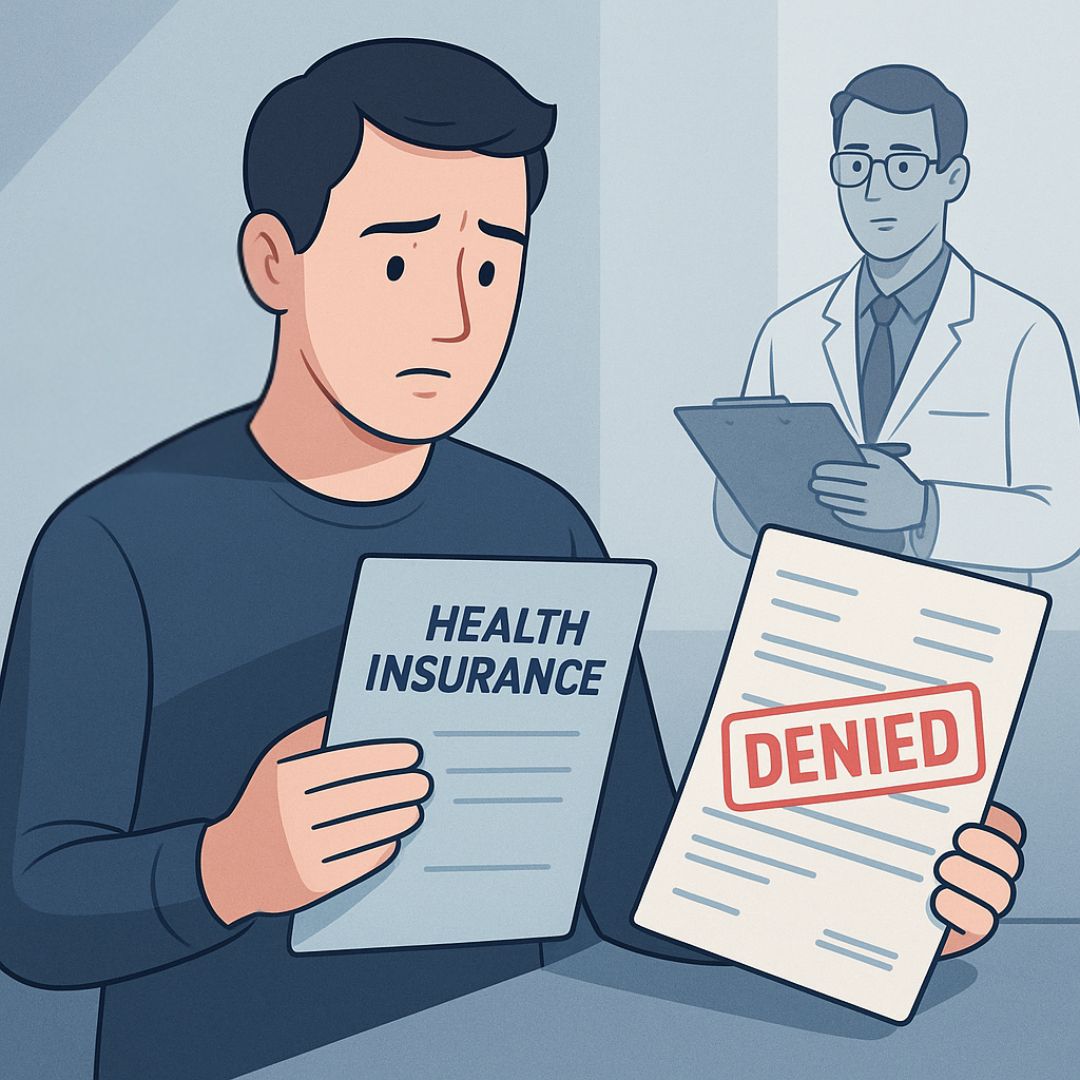
Ignorance is bliss, so goes an adage. Beware! Not every kind of ignorance would make you happy indeed. Of course, not the kind of ignorance shown in health insurance policies. In fact, this ignorance might turn out to be an abyss. A Latin phrase ‘Caveat Emptor’, which means ‘Let the Buyer Beware’ holds good while buying a health insurance policy, to a certain extent. The saying implies that it is the responsibility of the buyer to check the quality, suitability and the risk arising out of a product/service before purchasing it.
Lots of aspects must be considered before purchasing a health insurance policy. Especially, care must be taken while revealing details about the Pre-Existing Diseases (PED) to an official of the health insurance company. So what is a PED and why so much terrorising intro about it. Read on to know further…
What are pre-existing diseases?
A Pre-Existing Disease (PED) is a medical condition or an illness/disease, which a policyholder suffers from even before buying a health insurance policy. According to the Insurance Regulatory and Development Authority of India (IRDAI), a medical condition is said to be a PED if it was diagnosed by a medical practitioner or treatment was undergone for it within 3 years (36 months) before the commencement of the health insurance policy. (Earlier, the said period was 48 months; however, the IRDAI reduced it to 36 months, effective from April 1, 2024.) In short, if you had a medical condition or if any health issue was known to you before buying the health insurance policy, it's called a PED in the insurance parlance.
For instance, if someone has high blood pressure, diabetes, thyroid, asthma, etc., before purchasing the policy, it must be revealed to the official of the insurance company. If the PEDs are not revealed properly, there are high chances that the claim could be rejected, even though the premium amount was paid in lakhs for several years. Not that one cannot purchase a health insurance policy, if he/she has PEDs, but that the PEDs have to be revealed properly, without hiding them to the insurance agent.
PED waiting period
Another important aspect that could not be ignored while purchasing a health insurance policy is the waiting period. In India, almost all health insurance companies have an option to cover PEDs, but only after an agreed upon waiting period. That is, during the waiting period, if any claim is made by a policyholder, for the treatment of the PED, then the claim would instantly be rejected by the insurance company. The waiting period is not the same across all the insurance companies, it might differ from company to company. However, in general, most insurance companies cover PEDs after a waiting period of say two to three years.
Some insurance companies have a concept called riders. If you purchase a rider by paying an additional premium, then there will be a reduction in the waiting period and in fact, several insurance companies provide PED coverage from Day 1. The duty of the policyholder is to reveal all the details about the PEDs to the insurance company and choose a policy that has no/lower waiting period. Whether you purchase an individual health insurance policy or a family floater policy, the thumb rule is to buy a policy with no/lower PED waiting period.
Why are PEDs a cause of concern for policyholders?
Many people might believe that hiding details about the PEDs might reduce the premium amount payable by the policyholders year over year. Agreed, you might pay lesser annual premiums, no denying at all. However, there will be serious consequences, even to the extent of rejection of the claim.
That is, if an insurer (insurance company) finds out that one has not disclosed complete details about PEDs, then they have the right to reject the claim; particularly, if the claim/treatment is somehow or other related to that undisclosed PED. Consequence - the policyholder will end up paying the exorbitant medical bills from his/her pocket. In some cases, the non-disclosure of PEDs might even result in the cancellation of the insurance policy itself, leaving you uninsured.
Insurance policies are agreements/contracts, between the insurance company and the policyholder. The policies are built on a legally binding principle known as ‘utmost good faith.’ It means, both the insurance company and the policyholder must be out and out honest and transparent. The policyholder is obligated to reveal/divulge all relevant health details, including PEDs, while purchasing a health insurance policy. IF one hides a PED, it’s like, he/she has violated the fundamental legal principle. It’s because of this violation, the insurer has every right to act against your policy, be it rejection of a specific claim or cancellation of the entire policy completely.
Does every visit to a doctor count as a PED?
No, not at all. Regarding PEDs, insurance companies will only consider those ailments/diseases/medical conditions that could have a potential impact in your overall health in the long run. Therefore, if you visit your family doctor for a normal fever, cold, running nose, cough, mild itching, dandruff cases, etc., chill, you need not reveal all these details to the insurer.
Co-payment clause for PED Coverage
In India, some health insurance companies have a ‘co-payment’ clause for covering PEDs. As per the co-payment agreement, the policyholder must pay a certain percentage of the total claim amount during claim settlement. The insurance company will only pay the remaining outstanding amount of the claim. Therefore, the policyholder must ensure that his/her policy does not come with a co-payment clause. That is, he/she must opt a policy wherein the entire amount would be paid only by the insurance company.
Why are PEDs a cause of concern for insurers?
Health insurance industry works on the very idea of sharing/transferring the risk. Lakhs and Lakhs of people pay hefty insurance premiums year over year. However, not all are bed-ridden, not everyone falls sick and not everyone meets with an accident. Of the lakhs, only a few need medical treatments and so only a few apply for the coverage. Thus, the funds collected from the healthy policyholders cover the medical treatment cost of those who get admitted to hospital for any reason. Therefore, the system of health insurance must maintain a balance between the healthy and the needy. PEDs often pose a challenge to this balance. It is likely that people with PEDs might use their insurance coverage sooner than healthier individuals and owing to this, there is a cost involved for the insurers. That’s why PEDs are a big concern for health insurance companies.
Common PEDs, though not exhaustive
Lifestyle diseases: BP (hypertension), diabetes (Diabetes Mellitus), high cholesterol (hyperlipidaemia), thyroid (both hypo and hyper), medically diagnosed obesity.
Chronic respiratory conditions: Chronic Obstructive Pulmonary Disease (COPD), asthma, chronic bronchitis.
Cardiovascular conditions: Any heart disease such as coronary artery disease, angina etc., stroke or past heart attacks.
Musculoskeletal conditions: Osteoarthritis, Rheumatoid Arthritis, slipped disc, spinal disorders, knee or joint issues (especially if undergone surgery), etc.
Organ-specific ailments: Kidney stones, fatty liver, cirrhosis, gallbladder stones, cataract, all types of hernia, fistulae, haemorrhoids (piles), fissure, etc.
Other Chronic Conditions: Any form of cancer if previously diagnosed and treated, epilepsy, lupus, sleep apnea, certain mental and psychiatric illnesses, especially if diagnosed and treated previously).
Wait. These are not all and there’s more to the story. The tale of PEDs might end abruptly without covering the concept of Moratorium Period. No worries…see you soon on the page of ‘Moratorium Period.’ Until then…