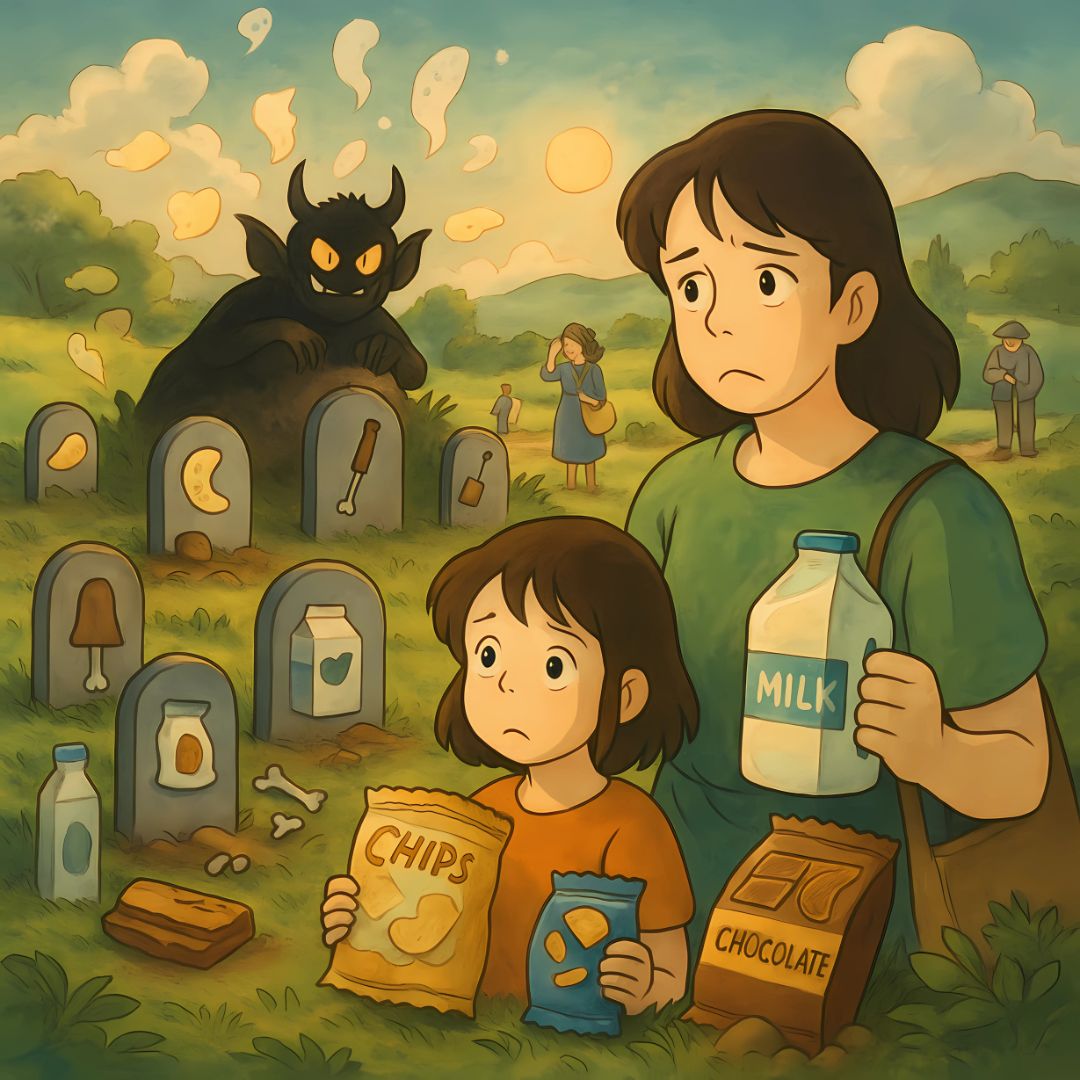
Have you ever noticed that your favourite chips packet feels lighter, yet the price remains the same? Have you been irritated to find that a pack of pens now has only eight instead of the usual ten? Are you sure that the cashew toppings on your biscuits have vanished into thin air? Now imagine this, last month you had purchased a 1kg wheat flour packet for ₹50, and the same brand is now offering only 900gm for the same price. Often, your mouthwash, which would last for six weeks, now runs out in just four weeks, while costing no less. If you answered “yes” to any of these, then you’ve already encountered the devil at play. Economic experts have christened the devil as ‘Shrinkflation’ that quietly erodes the value of your money. Shrinkflation is a stealthy form of inflation that reshapes the way we spend without us even realising it. Whether you like it or not, the hidden devil shrinkflation has become one of the most pervasive forms of inflation in the global economy — and a crucial business strategy for several companies.
What the Heavens is Shrinkflation?
The term ‘Shrinkflation’ is perhaps a portmanteau word, that is, the combination of two words – shrink and inflation. In the traditional inflation system, the prices of the products rise but the quantity/volume of the goods will be the same. In contrast, in the shrinkflation system, it is vice versa. It happens when the manufacturers reduce the size, weight or volume of products instead of increasing the price. Reason – the change would be so subtle that unsuspecting consumers would not even notice the change in the first place. This tactic allows the manufacturers to bear the ever-increasing costs of raw materials, labour, and transport, storage/distribution charges, without hiking the sticker price. Technically, shrinkflation is not illegal in any country, just that the new packaging must print exactly the new weight or volume.
The real psychology behind shrinkflation
I can see where your thoughts are headed now. It’s in fact easier for companies to increase the price straightaway, instead of beating around the bush. It’s such a pain to alter packet sizes and more challenges, right? Then why do most manufacturers choose this roundabout way, instead of increasing the prices. Just to appeal to consumer psychology or make advantage of their mindset. Several researchers and studies in behavioural economics reveal that consumers often notice price rises more than noticing reductions in the quantity. A price jump from ₹150 to ₹175 triggers instant backlash from customers, however, if the price is maintained at ₹150 and the weight/volume is decreased, most consumers don’t even realise it, and even if they are aware of it, they just shrug it off.
Shrinkflation – a global strategy
The shrinkflation strategy is not something that is unique to India. In the United Kingdom, a consumer watchdog named ‘Which?’ reported that a greater number of grocery items shrank in size over the last decade. Some researchers suggested that there are plans in France and Germany for imposing bans on shrinkflation. In September 2023, both the French and German governments wanted to ban shrinkflation, calling the act of manufacturers reducing the weight/volume of the content to camouflage price rise as “misleading”.
In Japan, some experts connect shrinkflation to "stealth price hikes." Manufacturers of snacks often shave off a few grams/volumes, challenging that even regular and loyal customers wouldn’t notice or mind the reduction.
Shrinkflation in India
In India, consumers are not new to shrinkflation, perhaps they might not know the devil’s name. But most consumers do realise it as an everyday reality. FMCG giants, who battle a lot to control the volatility in the input costs in edible oils, milk, wheat, or sugar, have downsized the size, weight or volumes of their products across the wide variety of products.
Who are losers?
For manufacturing companies, shrinkflation is a survival mechanism. With rising input costs, currency fluctuations, disruptions in supply chain, companies do not have any choice but to pass on the entire burden to customers. However, visible price hikes have the potential risk of losing market share to competitors. In contrast, by downsizing quantity, companies can keep intact the market share and at the same time able to cope the rising input costs.
You can just equate the shrinkflation with a silent tax. Inflation sparks public debate and heated arguments among policymakers, and other stakeholders, whereas shrinkflation often goes unnoticed. Individuals would realise only if the monthly bill stretched a bit or when the products they use ran off soon. Ultimately, it’s not the manufacturers who are losers, we, the consumers or the general public are secretly gobbled up by the devil called shrinkflation. It silently alters our household budget, burning a big hole in the pocket.
Cascading/cumulative effect of shrinkflation
At the beginning, it might seem to be so negligible. Say just a reduction of 10 gm, two pens in a 10-pen package and so on. It might be trivial for many of us, but once you carefully notice how the devil is at work and start multiplying your overall loss, the impact might be staggering. To maintain the same level of consumption, consumers would be forced to spend more. In the end, we would be spending more for soaps, biscuits, detergents and other basic household items.
Is it legal and ethical?
Technically, yes. As of now, shrinkflation is not illegal in most countries, unless there is any outright law that bans it once for all. However, there is a catch. The companies must strictly mention the new size, new weight or volume on their stickers. On ethical grounds, however, it does not pass the muster completely. New packaging is often designed in such way that it conceals the reduction, which is ethically questionable.
Can you escape from the clutches of shrinkflation?
Shrinkflation is the devil that has already been born — and its funeral is nowhere in sight. It cannot be eliminated once and for all. Unfortunately, we must take our armour and protect ourselves from the devil. Read the labels carefully, check for the net weight, volume or the quantity. Do not rely on the packaging size blindly. Do not go by the overall sticker price, calculate the unit price, say like the price for 100 gm or per litre. If discounts are available, buy in bulk, because jumbo packs face less damage due to shrinkflation. You can switch brands, for, often, smaller or regional brands might offer better quality and more value for lesser price. Though there might not be an immediate benefit out of it, demanding transparency from the company can a good strategy. Due to social media pressure and consumer forums, manufacturers might declare downsizing openly, and you can take a decision based on this.
Conclusion
“For lower- and middle-class families, who already struggle to make ends meet, the ‘vanishing grams or millilitres’ in everyday essentials such as milk or wheat flour is no less damaging than the visible price hikes. As consumers, the best strategy to defend ourselves from this devil is to stay vigil — read labels carefully, question the value, refuse to be deceived by glowing wrappers, and above all, think do you really need the product first.”
So, the next time you grab a chocolate bar or a shampoo bottle, try to identify whether the devil shrinkflation resides on it. If yes, act smart and silently change brands. If the item is a non-essential one, think seriously about buying it at all in the first place. In an era, wherein millimetres, grams, scoops and numbers are buried in a graveyard of shrinkflation, we consumers are the king to decide who must be buried next – our products or our pockets.?
Cheers! Catch you later with another interesting and informative episode. Until then...